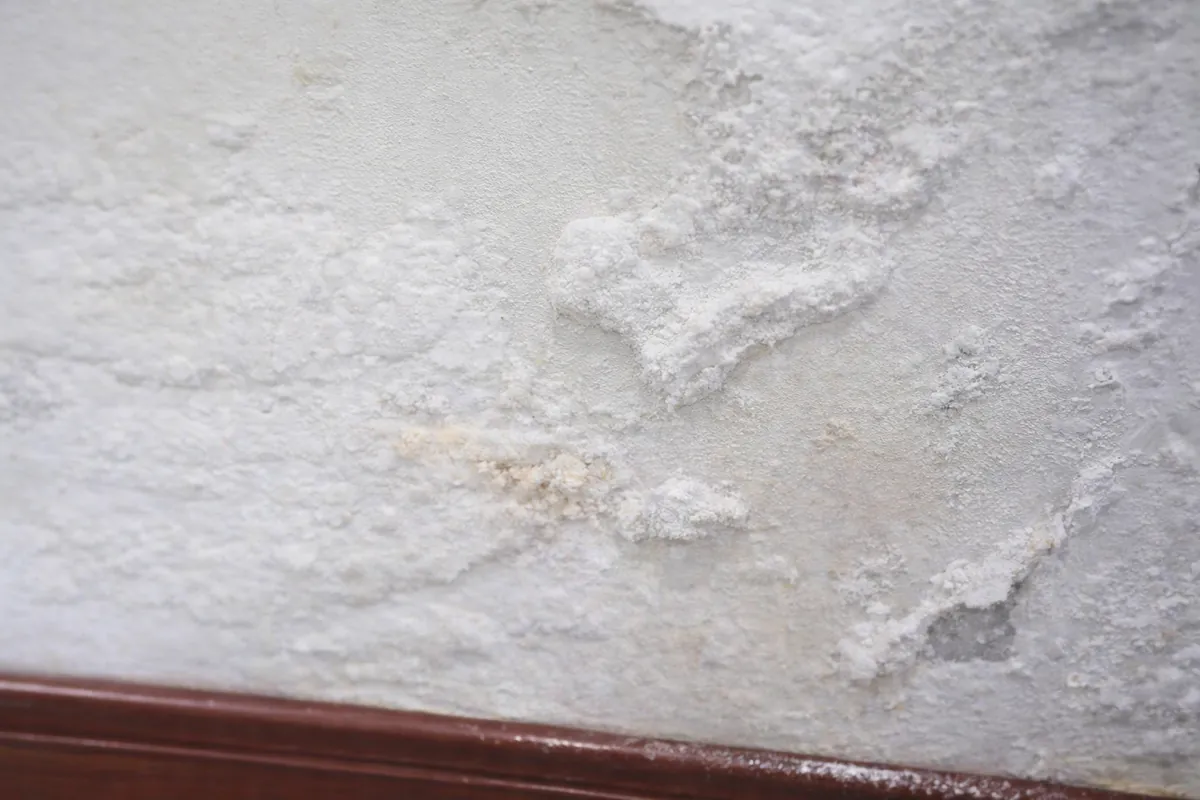
Ground-Floor Damp Walls and Peeling Paint: What Should Be Fixed First?
When damp walls, bubbling plaster, and peeling paint appear on a ground floor, many people think the first step is simple:
Patch the wall and repaint it.
If you want to know how to fix damp walls before painting, the first step is not repainting, but identifying where the moisture is coming from.
In practice, that is often the wrong place to start.
If the wall is not directly affected by a bathroom leak, but the floor also feels damp and an exterior wall may need waterproofing, then the problem is usually bigger than a damaged paint surface. In these cases, repainting too early may only hide the issue for a short time.
A more practical approach is to identify where the moisture is coming from first, then decide the repair sequence, waterproofing scope, and finishing system.
Why Ground-Floor Damp Walls Should Not Be Repainted Too Early
On ground floors, dampness may come from more than one source.
Common possibilities include:
- moisture rising from the floor
- water coming through an exterior wall
- long-term damp exposure in low-level wall areas
- weak or damaged existing wall finishes
If moisture is moving up from the floor, repairing only one damaged patch of plaster usually does not solve the real issue. The wall may look better for a while, but bubbling, flaking, or staining often returns.
That is why repainting should not come first. The source and direction of the moisture should be checked before choosing materials.
Check Whether the Problem Comes From the Floor or the Exterior Wall
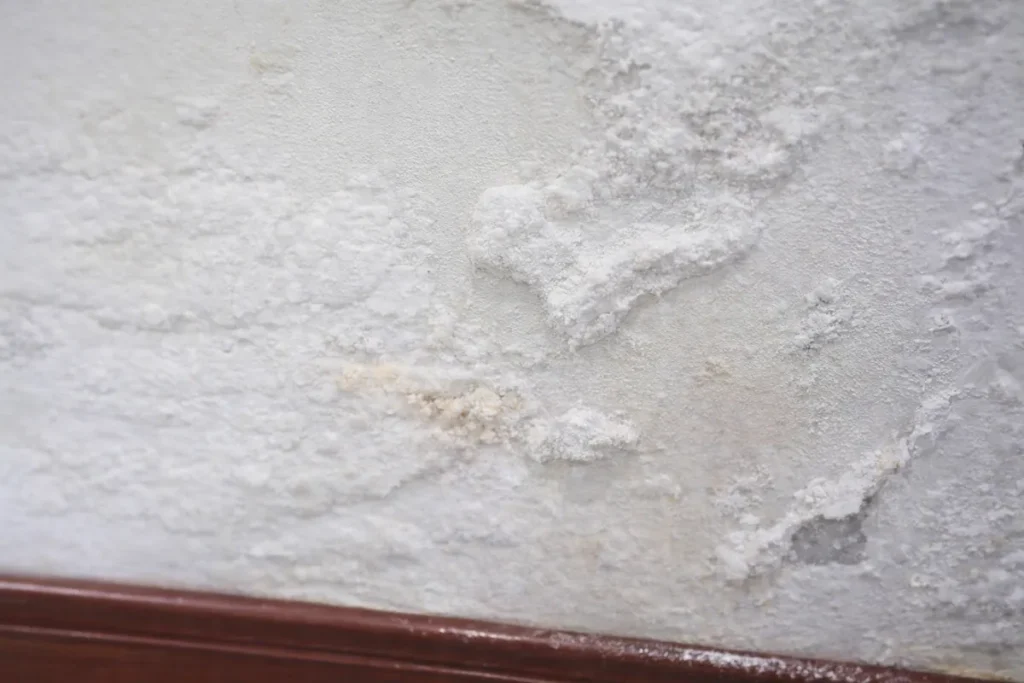
For this type of situation, the first question is usually not which paint to use.
The first question is:
Is the dampness mainly coming from the floor, the exterior wall, or both?
If the main problem is ground moisture, then wall repair should not be limited to the visibly damaged area only. In many cases, the floor treatment and the lower section of the wall need to be considered together.
If an exterior wall also shows signs of water penetration, then that area should be treated separately rather than mixed into a basic repainting plan.
Why Patching Only the Damaged Area Usually Does Not Work
When moisture is already affecting a ground-floor room, patching one damaged wall area often becomes a short-term fix rather than a real solution.
A more practical approach may include:
- treating the floor against moisture
- extending the wall treatment to an appropriate height
- dealing with any exterior wall waterproofing separately
- choosing the final finish only after the substrate is more stable
For example, if the lower wall area needs damp-related treatment, it is often more practical to extend the work to at least 4 ft (about 1.2 m) up the wall rather than repairing only the visibly damaged section.
A More Practical Repair Sequence for Damp Ground-Floor Walls
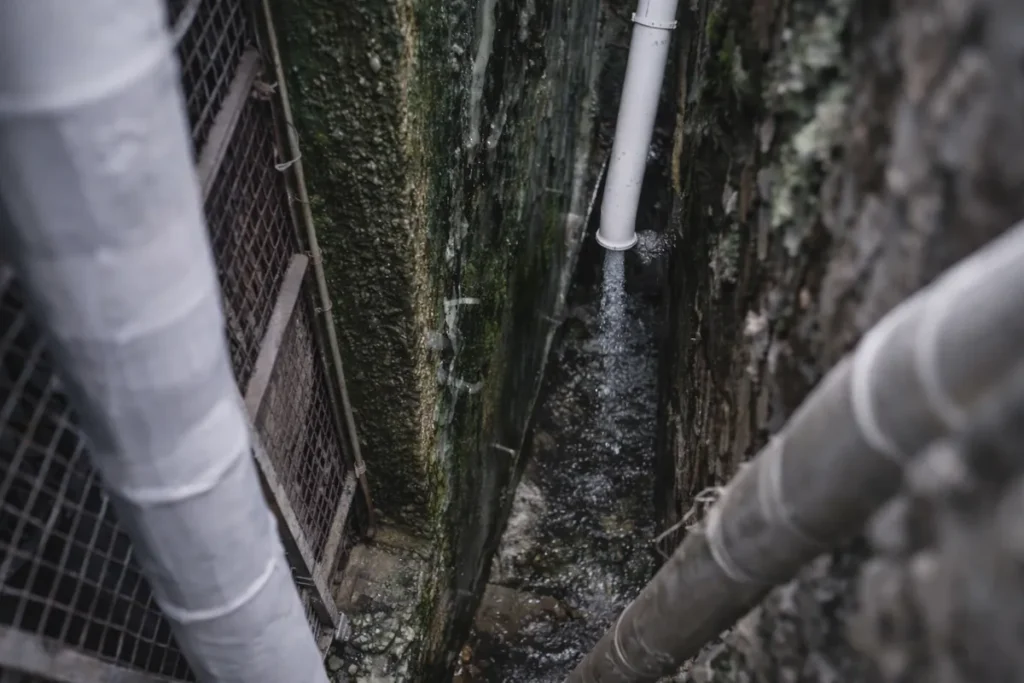
If the substrate is rough, uneven, or still in exposed masonry condition, it is usually better to make the surface more even first before applying a waterproofing layer.
In practical terms, the sequence often looks more like this:
- inspect the damp source
- repair or level the base where necessary
- apply the waterproofing system
- allow proper drying and curing
- apply the finishing coat if required
If the goal is mainly to stop damp-related problems rather than achieve a decorative wall finish immediately, then solving the substrate and waterproofing issues should come first.
DIY Work Is Possible, but Material Planning Matters
Some homeowners choose to do this kind of work themselves. That is not necessarily the problem.
In many cases, the bigger problem is not application itself, but using the wrong materials, getting the sequence wrong, or miscalculating the quantity needed.
That is especially common when people ask questions such as:
How much paint do I need for 1,076 sq ft (100 m²)?
That question sounds simple, but the answer depends on:
- the number of coats
- surface absorption
- product type
- wall condition
How to Estimate Paint Quantity More Accurately
A more practical formula is:
Estimated paint needed = total wall area × number of coats ÷ coverage rate
For standard interior wall paint, a rough reference may be:
- about 86–108 sq ft per kg per coat
- or about 39–49 sq ft per lb per coat
So if the wall area is 1,076 sq ft (100 m²) and the finish coat is applied twice, the paint needed may be roughly 44–55 lb (20–25 kg), depending on product type and wall condition.
This is much more reliable than guessing by bucket count alone.
Why Waterproofing Is Usually Better in Two Coats
For waterproofing work, one coat may not always be enough.
A more stable approach is often:
- first coat in one direction
- second coat in the opposite direction
This usually gives more even coverage and better film formation.
Using only one coat may reduce material use, but it also increases the risk that the waterproofing layer is not strong enough in practice. On moisture-related jobs, cutting one step too early often leads to more difficult rework later.
If the project involves damp-prone wall areas, you can also review our Waterproof Coatings page.
White Walls Are Usually a Safer Choice in Damp-Prone Rooms
If the wall is in a moisture-prone ground-floor environment, a simple white interior finish is usually a practical choice.
White is often easier because it is:
- clean-looking
- easier to match
- easier to touch up later
- less risky than more complex decorative finishes
In spaces like this, it is usually better to solve the damp-related problem first and keep the finish choice simple.
If the final interior finish is also part of the project, you may also review our Interior Wall Paint page.
Floor Color Should Usually Stay Conservative

If the wall finish is white and the floor will receive a coating system, the floor color should usually be selected carefully.
In many cases, mid-grey is a practical option because it:
- works well with white walls
- shows less dirt than very light colors
- is less demanding than very dark colors
- tends to look more stable in real use
For this kind of project, the best-looking color is not always the most practical one. A more neutral and stable choice often works better over time.
Real Project Planning Is Better Than Buying Paint Too Early
The biggest mistake in these situations is usually not that the material is too expensive.
The biggest mistake is trying to simplify the early steps and then dealing with rework later.
A more practical decision starts with a few clear questions:
- Is the dampness coming from the floor, the exterior wall, or both?
- Does the lower wall need treatment beyond the visibly damaged patch?
- Should leveling or plastering be done before waterproofing?
- Is the goal only to stop moisture, or also to improve the decorative finish?
- How much material is actually needed based on area and number of coats?
When those questions are answered first, waterproofing, paint selection, and finishing decisions become much easier.
Final Thoughts
Ground-floor damp walls should not be treated like a simple repainting problem.
If the wall is already peeling, bubbling, or showing signs of moisture, the first step is usually not to buy paint. The first step is to understand the damp source and decide the correct repair sequence.
If needed, floor treatment, lower wall waterproofing, exterior wall waterproofing, and finishing coats should all be considered together rather than separately.
In many cases, how to fix damp walls before painting depends on the moisture source, the wall condition, and the correct repair sequence.
For projects that also involve exterior wall renewal, you may also review our Exterior Wall Paint page.
If you need to discuss product direction, wall condition, or practical project planning, you may also contact us for further discussion.
FAQ
What usually causes damp walls on a ground floor?
Common causes include moisture rising from the floor, water penetration from an exterior wall, or long-term low-level damp exposure.
Should I repaint a damp wall first?
Usually no. It is better to assess the moisture source and repair sequence before repainting.
How high should damp wall treatment go?
In many cases, treatment may need to extend to around 4 ft (about 1.2 m) up the wall, depending on the condition.
Is one coat of waterproofing enough?
Sometimes, but two coats are usually more reliable for better coverage and protection.
Can I estimate paint quantity by bucket count?
It is better to calculate paint by area, number of coats, and coverage rate instead of guessing by bucket count.