Old Wall Repainting Problems: Special Cases of Efflorescence and Stain Bleeding
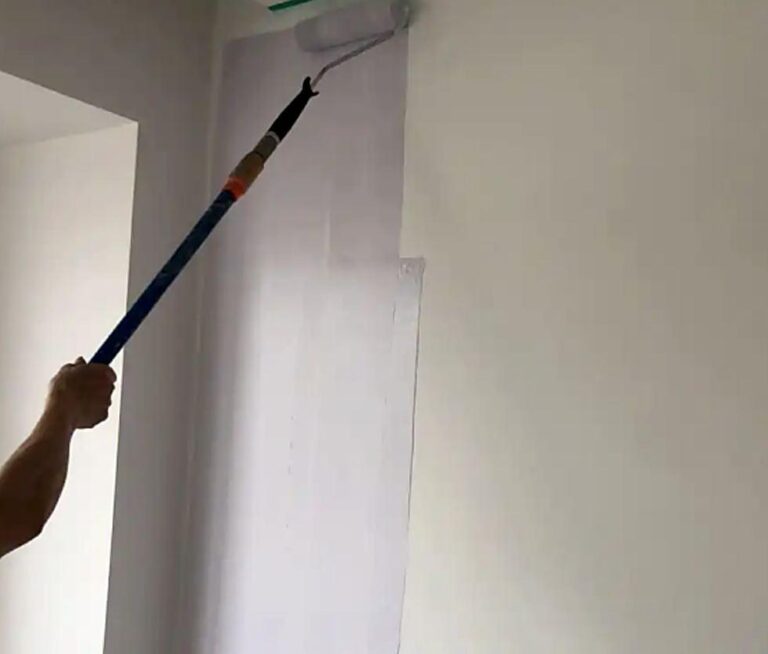
Old wall repainting problems are not always caused by ordinary hiding issues. In most repainting jobs, suitable renovation coatings can usually cover the surface properly. However, there are still some special situations where ordinary repainting is not enough.
The two most common special cases are efflorescence on walls and stain bleeding through paint. Although both problems may appear as poor repainting results, their causes are different, and the treatment methods should also be different.
Efflorescence on Walls Is Common in Old Wall Repainting
Efflorescence is relatively common on old walls, and in recent years it has appeared more often in some repainting projects. One reason is that some lower-cost wall materials contain a relatively high filler content. Once the wall becomes damp, alkaline materials can return to the surface more easily.
A more thorough treatment method is to remove all unstable surface layers and then apply new water-resistant putty, especially when the efflorescence is serious and the wall is already powdering or peeling.
If the wall also has water seepage, waterproofing should be completed first before repainting. Otherwise, the same problem may return even after renovation.For moisture-related wall conditions, you can also review our waterproof coatings solutions.
The advantage of this method is that it is more thorough. The disadvantage is that the cost is higher, the repair time is longer, and skilled workers are usually needed.
When Efflorescence Is Not Severe
If the efflorescence is not especially serious, a simpler method can be used.
In this case, the wall can first be treated with 1–2 coats of an alkali-blocking primer or sealer. After the base is sealed properly, the renovation topcoat can be applied.
The disadvantage of this method is that it can only be used for walls where the efflorescence is not too serious.
The advantage is that the process is simpler, professional labor is less necessary, the work can usually be completed faster, and the cost is lower.
Stain Bleeding Through Paint Is Less Common
Compared with efflorescence, stain bleeding is less common.
Part of this problem is related to the hiding power of the paint itself. For example, red is naturally a more translucent color. In this type of case, a renovation coating with stronger hiding power can solve the problem.
But another type of stain bleeding is not mainly related to hiding power. It is caused by stains or pigments penetrating back to the surface. In many cases, this comes from smoke residue, dust, watercolor pens, marker marks, or other water-soluble substances.
Example of Stain Bleeding Through Paint
In the following example, the wall had different kinds of stains and pen marks. After one coat of renovation paint was applied, most of the stains were covered, but the red mark still showed through.
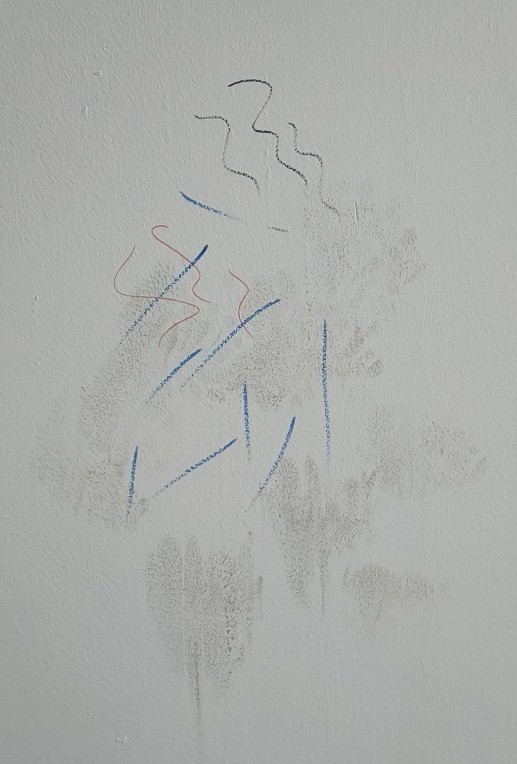
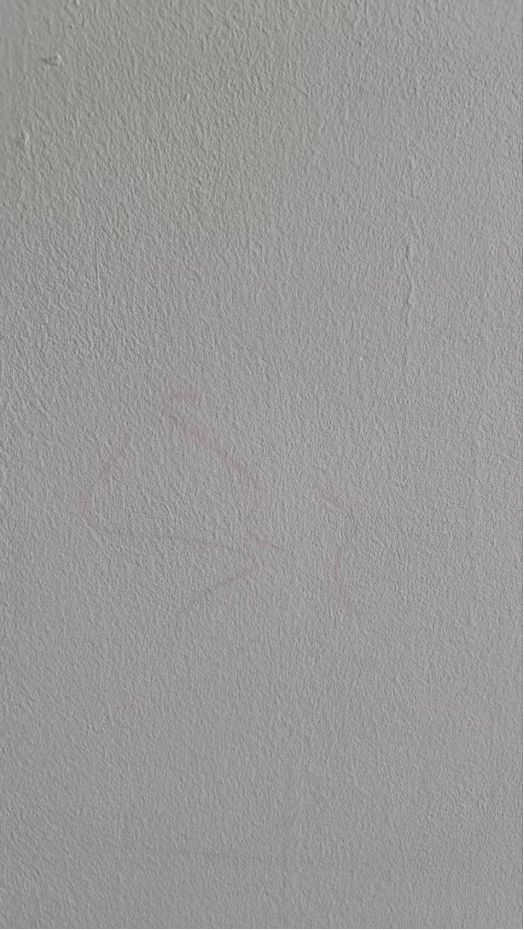
This is a typical case of stain bleeding through paint.
The pigment in this kind of red watercolor pen is highly water-soluble. Once it comes into contact with the moisture inside latex paint, it can migrate back to the surface.
In this kind of situation, even if you apply three coats or five coats, the stain may still not be fully covered.
What Should Be Done in This Situation?
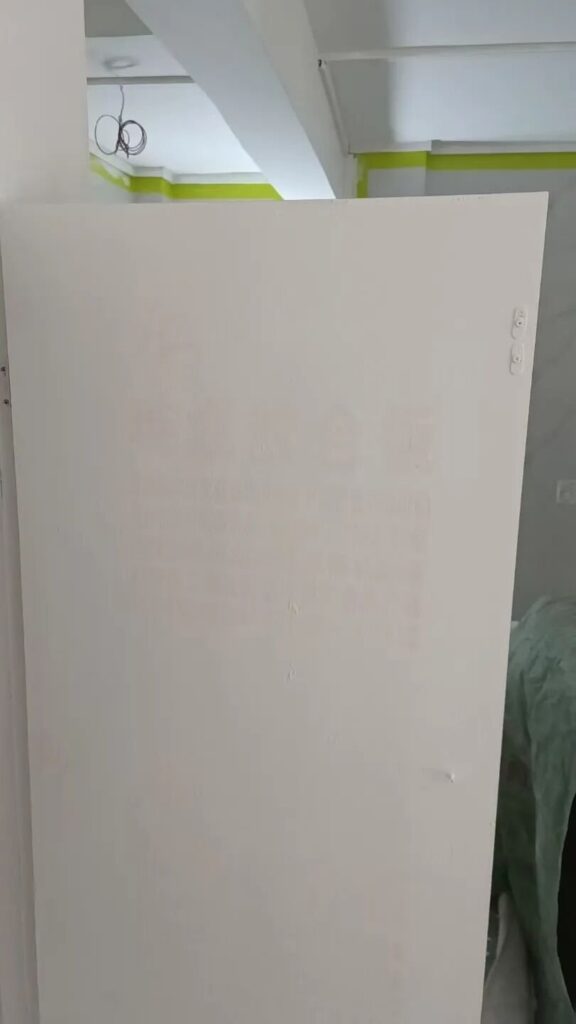
Before repainting, it is better to first apply one coat of stain-blocking sealer to lock in the stains that are likely to bleed through. At the same time, this can also improve the strength of the base layer and reduce the risk of later cracking or peeling.
After the sealer has dried completely, the renovation topcoat can be applied again.
The Key in Old Wall Repainting Is to Identify the Real Problem First
When an old wall cannot be covered properly, the reason is not always the same.
Some walls fail because of efflorescence on walls and damp-related substrate problems. Other walls fail because of stain bleeding through paint.
If the real cause is not identified first, simply applying more topcoat may increase labor and material cost without solving the problem.
If the Problem Is Serious Efflorescence
Remove unstable layers and rebuild the substrate before repainting.
If the Problem Is Mild Efflorescence
Use an alkali-blocking treatment first, and then apply the renovation topcoat.
If the Problem Is Stain Bleeding
Use a stain-blocking sealer first, and then repaint after it dries.
Product Selection Also Matters
For distributors, traders, and brand owners, renovation-related wall coating options can also be discussed through our OEM / Private Label service.
In old wall repainting, the coating system should not only improve appearance. It should also match the real renovation problem.
For this type of repainting work, important points include strong hiding power, suitability for old wall repainting, compatibility with alkali-blocking treatment, compatibility with stain-blocking treatment, and better substrate stability after treatment.
In special repainting cases such as efflorescence and stain bleeding, choosing the right treatment system is often more important than simply increasing the number of topcoat layers.
If you are dealing with old wall repainting problems and are not sure whether the issue is efflorescence, stain bleeding, or another substrate problem, contact us with your wall condition and project details.